


Australia’s Workplace Exposure Limits Change on 1 December 2026
The 2026 Workplace Exposure Limits (WEL) replace the old Workplace Exposure Standards (WES). This reform tightens dozens of airborne contaminant limits, adds new substances, and removes numeric limits for 33 carcinogens.
If your site welds, cuts, grinds, batches, mills, bakes, sprays, mixes, handles diesel plant, or generates dust, the new WEL applies directly to your operations.
What Are the 2026 Workplace Exposure Limits (WEL)?
WEL are mandatory airborne contaminant limits under Australian WHS Regulations. From 1 December 2026, no person at a workplace may be exposed above these limits.
The new WEL list includes:
• 31 new substances • dozens of tightened limits • new respirable vs inhalable fractions • 33 carcinogens with no safe level • 6 prohibited substances removed entirely
WEL apply to all workers, contractors, visitors and anyone on site.
The Five WEL Changes Most Likely to Affect Your Site
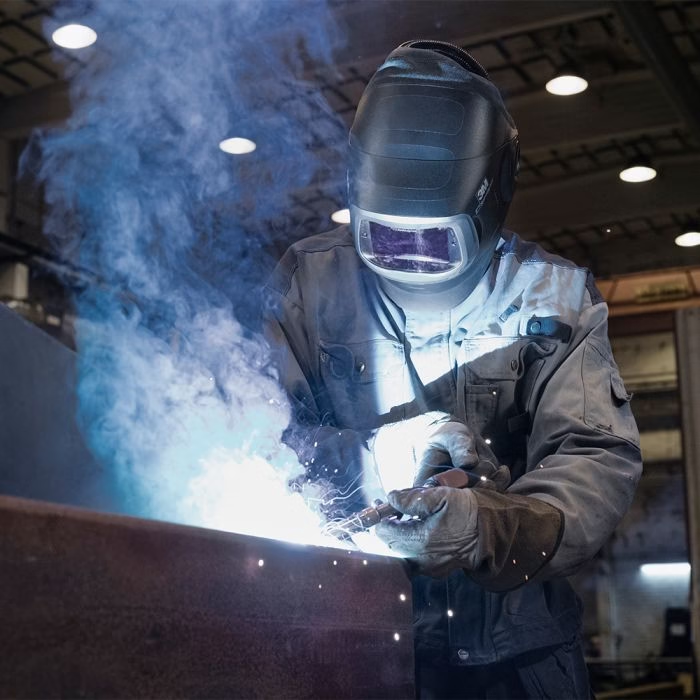
1. Welding Fume – 10× Tighter Limits
• Manganese: 1 → 0.1 mg/m³ inhalable / 0.02 mg/m³ respirable • Chromium VI: numeric limit removed (NTGC – no safe level) • Nickel: 1 → 0.1 mg/m³ • Cobalt: 0.05 → 0.02 mg/m³
2. Cement Dust – 10× Tighter
• Portland cement (respirable): 10 → 1 mg/m³
3. Wood, Grain & Flour Dust
• Soft wood dust: 5 → 2 mg/m³ • Grain dust: 4 → 1.5 mg/m³ • Flour dust: NEW 0.5 mg/m³
4. Diesel Particulate Matter (DPM)
• Respirable elemental carbon: NEW 0.01 mg/m³
5. Carcinogens With No Safe Level
• Chromium VI compounds • PAH mixtures • Vinyl chloride • Hydrazine • Benzidine • And more
Why Many Sites Will Fail Under the New WEL
The new limits are significantly tighter, meaning:
• A workshop that passed air monitoring in 2025 may fail in 2027 • Ventilation sized for old WES values is now insufficient • Old monitoring data may not measure the correct respirable fraction • PPE alone is no longer considered reasonably practicable
WEL compliance requires layered engineering controls.
How to Comply With the 2026 WEL (Welding + Dust + Diesel + Construction)
A Four‑Layer Engineering Control Strategy
To meet WEL requirements, workplaces must combine:
1. On‑Gun Fume Extraction (Capture at the Arc)
• Removes welding fume before it enters the breathing zone • Essential for stainless welding (Chromium VI – NTGC) • Reduces respirable manganese, nickel and cobalt • Minimises fume spread across the shed or site
2. Mobile Fume Extraction Units (Flexible Source Capture)
• Portable extraction for welding bays, fabrication areas and construction sites • Captures fume within the 300 mm breathing zone • Ideal for multi‑bay workshops and temporary worksites • Handles shifting tasks and mobile welding operations
3. Whole‑Building Ventilation (General Extraction)
• Roof extraction • Wall‑mounted exhaust • Axial and centrifugal systems • Purge ventilation for enclosed vehicle areas
Required for:
• Cement dust (1 mg/m³) • Wood dust (2 mg/m³) • Flour dust (0.5 mg/m³) • Grain dust (1.5 mg/m³) • Diesel particulate matter (0.01 mg/m³)
Whole‑building extraction prevents airborne contaminants from accumulating overhead or drifting across the workspace.
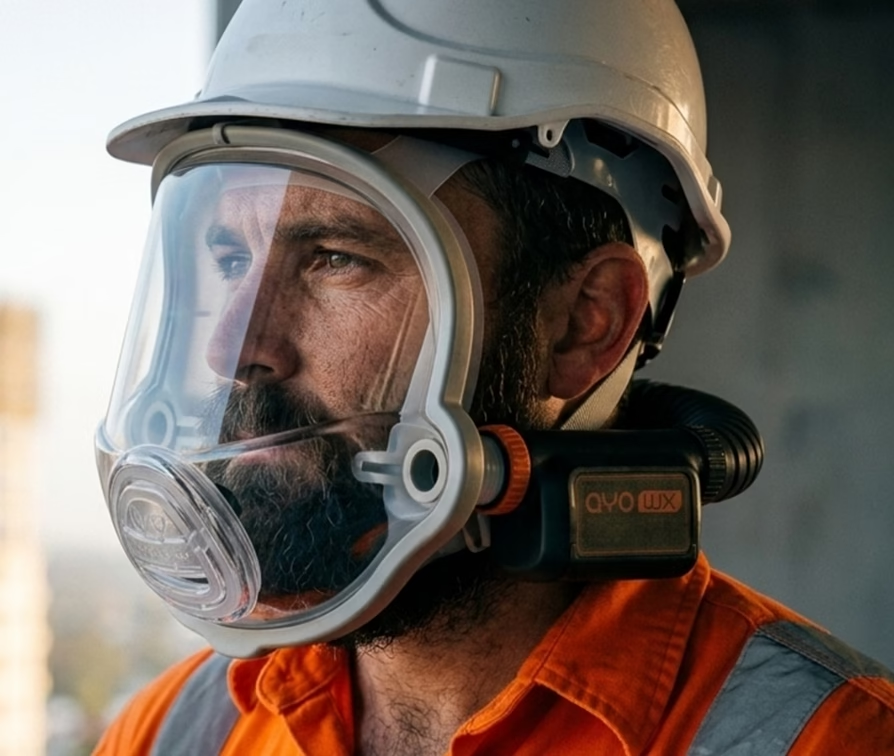
4. PAPR Systems (Positive‑Pressure Respiratory Protection)
• Essential for stainless welding (Chromium VI – NTGC) • Required for high‑dust construction tasks • Protects against respirable cement, flour, grain and wood dust • Ideal for enclosed or poorly ventilated spaces • Reduces fatigue during long welding or grinding sessions
PAPR is the final layer when engineering controls cannot eliminate exposure.
How All Four Controls Work Together (WEL‑Compliant System)
• On‑gun extraction captures fume at the arc • Mobile extraction units capture fume and dust at the task • Whole‑building extraction removes airborne contaminants • PAPR protects the worker directly
Together, these create a multi‑layered, WEL‑compliant control system for welding bays, workshops, construction sites, tunnels, mixing sheds, grain handling areas and food processing facilities.
Construction Site Dust Hazards Under WEL 2026
Construction sites face multiple airborne contaminants:
• Respirable cement dust (1 mg/m³) • Lime dust (1 mg/m³) • Wood dust (2 mg/m³) • PVC dust (1 mg/m³) • Flour and grain dust (food‑related sites) • Diesel particulate matter (0.01 mg/m³) • General demolition dust • Silica (separate WHS requirements)
Controls include:
• On‑tool extraction • Mobile dust extraction units • Whole‑site ventilation • PAPR systems • Wet cutting and suppression • Exclusion zones • Task rotation
Air Monitoring Requirements Under WEL 2026
Air monitoring is mandatory when:
• You are not certain whether WEL values are exceeded • Monitoring is needed to determine health risk
Monitoring must be done by a competent person and results must be:
• Recorded • Kept for 30 years • Accessible to exposed workers
Your 2026–2027 WEL Compliance Plan
• Identify all welding fume and dust hazards • Re‑baseline air monitoring against WEL values • Install on‑gun extraction • Deploy mobile extraction units • Upgrade whole‑building ventilation • Issue PAPR systems for high‑risk tasks • Verify performance with post‑installation monitoring • Maintain, train and document
2026 Workplace Exposure Limits (WEL) – Frequently Asked Questions
What are Workplace Exposure Limits (WEL)?
Workplace Exposure Limits are the legally enforceable airborne contaminant limits under Australia’s Work Health and Safety (WHS) Regulations. From 1 December 2026, WEL replace the old Workplace Exposure Standards (WES). No person at a workplace may be exposed above these limits.
When do the new WEL take effect?
• The new limits apply from 1 December 2026. • There is no transition period. • All monitoring, controls and WHS documentation must reference WEL from that date.
Why were the WEL introduced?
• To update airborne contaminant limits based on contemporary health evidence. • To tighten limits that were no longer protective. • To introduce limits for substances that previously had none. • To remove numeric limits for carcinogens where no safe threshold exists.
What are the biggest changes in the 2026 WEL?
• Welding fume limits (manganese, nickel, cobalt) tighten by up to 10×–50×. • Respirable cement dust limit tightens from 10 mg/m³ to 1 mg/m³. • New limits for flour dust, grain dust, wood dust and PVC dust. • Diesel particulate matter (DPM) receives its first limit: 0.01 mg/m³. • 33 carcinogens lose their numeric limits entirely (non‑threshold genotoxic carcinogens).
What does it mean when a substance has “no safe level”?
Some airborne contaminants are classified as non‑threshold genotoxic carcinogens (NTGCs). For these substances: • There is no acceptable exposure number. • PCBUs must eliminate or minimise exposure as far as reasonably practicable. • Monitoring alone is not considered a sufficient control.
Examples include Chromium VI compounds, PAH mixtures containing benzo[a]pyrene, vinyl chloride, hydrazine and benzidine.
Who must comply with the WEL?
• All PCBUs (Persons Conducting a Business or Undertaking). • All workplaces where airborne contaminants may be generated. • All industries including fabrication, construction, food processing, timber, mining, logistics, warehousing and manufacturing.
What is a PCBU?
A PCBU is a Person Conducting a Business or Undertaking. This can be a company, sole trader, partnership, government body or organisation responsible for workplace operations and WHS compliance.
Do WEL apply to visitors and contractors?
Yes. WEL apply to any person at the workplace — workers, contractors, customers, inspectors and visitors.
What happens if my workplace previously passed air monitoring under WES?
A workplace that passed monitoring in 2025 may fail under WEL in 2027 without changing anything. This is because: • The limits have tightened significantly. • Many substances now have respirable‑fraction limits. • Some contaminants now have no safe level. • Old ventilation systems were sized against older, higher limits.
What are respirable vs inhalable fractions?
• Inhalable: particles that enter the nose and mouth. • Respirable: fine particles that reach deep lung tissue. Respirable limits are generally lower and more difficult to meet.
Do I need to do air monitoring under WEL?
Air monitoring is required when: • You are not certain whether WEL values are exceeded. • Monitoring is needed to determine health risk. • You need to verify the effectiveness of control measures.
Monitoring must be done by a competent person, such as an occupational hygienist.
How long must air monitoring records be kept?
• Air monitoring records must be kept for 30 years. • They must be accessible to any person who may have been exposed.
What controls are required to comply with WEL?
WHS law requires PCBUs to use the hierarchy of controls:
• Elimination • Substitution • Isolation • Engineering controls • Administrative controls • PPE / RPE
Engineering controls are the primary method for WEL compliance.
What engineering controls help meet WEL requirements?
• On‑gun fume extraction (capture at the arc) • Mobile fume extraction units • Whole‑building ventilation (roof, wall, axial, centrifugal) • Local exhaust ventilation (LEV) • Diesel particulate filtration • On‑tool dust extraction for construction • HEPA filtration and negative‑air units
Where do PAPR systems fit into WEL compliance?
PAPR (Powered Air Purifying Respirator) systems provide positive‑pressure filtered air and are used when engineering controls cannot fully eliminate exposure. They are essential for: • Stainless welding (Chromium VI – no safe level) • High‑dust construction tasks • Enclosed or poorly ventilated spaces • Respirable cement, flour, grain and wood dust environments
Which industries are most affected by the new WEL?
• Welding and fabrication • Construction and precast concrete • Timber, joinery, grain and flour processing • Food and beverage manufacturing • Transport, warehousing and logistics • Mining, smelting and heavy industry • Plastics and PVC fabrication
What should workplaces do before 1 December 2026?
• Identify all airborne contaminants on site. • Re‑baseline air monitoring against WEL values. • Upgrade extraction and ventilation systems. • Implement source‑capture controls (on‑gun, on‑tool, mobile units). • Introduce PAPR for high‑risk tasks. • Update SWMS, SDS registers and WHS documentation. • Train workers on new controls and monitoring requirements.
What happens if a workplace does not comply with WEL?
Non‑compliance may result in: • Regulatory enforcement • Improvement notices • Prohibition notices • Penalties under WHS legislation • Increased health risks for workers • Liability exposure for PCBUs
Do WEL apply to outdoor worksites?
Yes. If airborne contaminants are generated outdoors — welding, cutting, grinding, diesel plant, construction dust — WEL still apply.
Do WEL apply to incidental exposure?
Yes. Incidental exposure (e.g., drive‑through outlets, loading docks, traffic control, roadside works) must be minimised as far as reasonably practicable.
Can PPE alone be used to comply with WEL?
No. PPE is the last line of defence. Regulators expect higher‑order controls to be implemented first.
Where can I find the official WEL list?
The official list is published by Safe Work Australia in: • Workplace Exposure Limits for Airborne Contaminants
👉Aimwell™ AYO™ WX Powered Respirator Series👉 Binzel xFUME Flex Fume Extraction 👉 Binzel Fume Extraction MIG Torch xFUME® PRO👉 BINZEL Welding Fume Extraction System FEC👉 Binzel Fume Extraction Torches xFume TIG 👉 617830 Speedglas G5-01VC welding helmet h/duty Adflo PAPR 👉 637720 G5-03TW SPEEDGLAS Pro Air Adflo PAPR welding helmet 👉 3M Versaflo PAPR M-Series Face Shields 👉 3M Versaflo PAPR & Supplied Air 👉3M™ Scott™ Self-Contained Breathing Apparatus (SCBA)